Tokyo Marathon
Tokyo, Japan · March · World Marathon Majors
Why people love it
- Flat: under 90 m (300 ft) of gain, and the men's record is 2:02:16
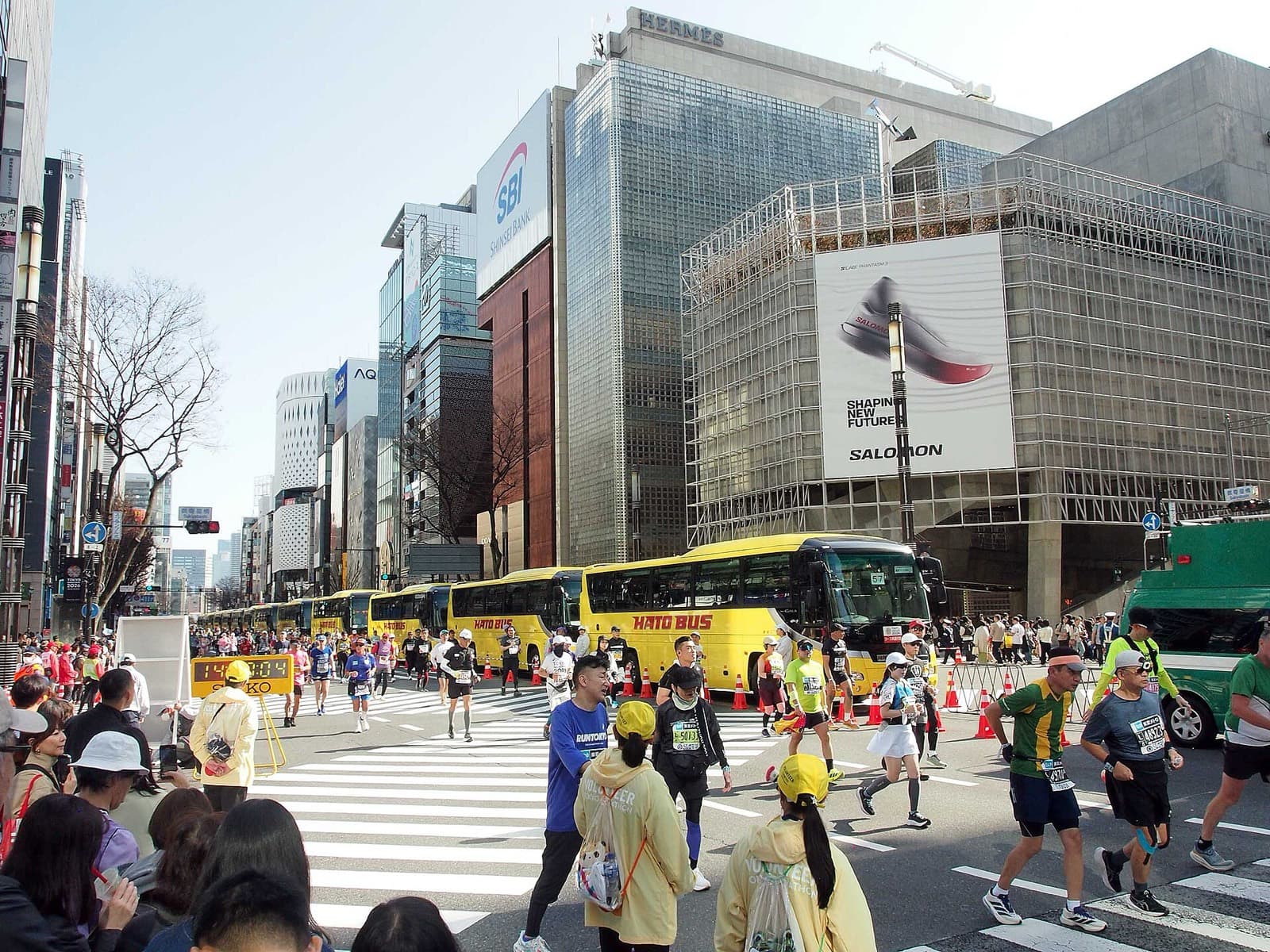
- Closed avenues through Shinjuku, Asakusa and Ginza with spectators along most of the course
- Volunteers are the most consistent praise; toilets are clean and plentiful before the start
- Race-day subway is free for entrants and the start is a short walk from Shinjuku Station
Watch out for
- Lottery odds for internationals are under 10%; charity bibs run about $1,000 to $5,000
- Intermediate cutoffs are strict; the effective limit is roughly 6:15 to 6:30, not the posted 7 hours
- In 2025, water and cups ran short from about 22 km (14 mi) for mid and back of pack
- Corral waits run 30 minutes or more in the cold; bring throwaway layers
- The finish exit is long and slow; agree a meeting point because phones may fail
Race
How racers feel about it, how well it is run, and how it treats a first timer. Counts for 28% of the overall score.
Toughness: Moderate
- Racer satisfactionLoved4.0
RaceRaves averages 3.8 of 5 from 47 ratings. Volunteers, landmarks and crowds are praised; 2025 aid shortages and tight cutoffs are the knocks. · Medium confidence
- OrganizationWell run3.8
Clear rules and plenty of toilets are praised. In 2025, water ran out from 22 km (14 mi) and expo queues passed 2 hours. · Medium confidence
- First timer friendlyDoable3.3
Flat with strong volunteers and a 7 hour limit, but intermediate gates make the effective limit about 6:15 to 6:30. Corral waits are cold. · Medium confidence
Course traits, not part of the score
- PR potentialFast4.1
Under 90 m (300 ft) of gain and a 2:02:16 men's record, but out-and-backs, no tangent line and early crowding hold it below Berlin. · Medium confidence
Course
Scenery, road surface, closures, and room to run. Counts for 20% of the overall score.
- Course sceneryBeautiful3.6
Shinjuku towers, Asakusa temples, Ginza and the Imperial Palace area. RaceRaves scenery is 3.3 of 5 and a 2023 reviewer called it dull. · Medium confidence
- Room to runSome pinch points2.9
Repeated out-and-backs and switchbacks drew complaints in 2024 and 2026, the early kilometres are crowded and there are no marked tangents. · Medium confidence
- Road surfaceGood4.3
Clean, well-kept asphalt reported by 2026 reviewers, with one cobbled stretch near the finish. · Medium confidence
- Road closuresFully closed4.7
Central Tokyo roads are closed for the full route. Photos from 2016, 2020 and 2026 show empty avenues behind barriers. · Medium confidence
Course traits, not part of the score
- Course flatnessPancake flat4.6
Under 90 m (300 ft) of gain per a 2026 runner, and under 35 m (115 ft) of total change per Marathon Handbook. · Medium confidence
- Net downhillEven3.4
Net downhill over the first few kilometres, then a flat profile. Times are valid for Boston qualifying. · Medium confidence
Support
Crowds, aid stations, the start, and pacers. Counts for 20% of the overall score.
- Start logisticsSmooth3.7
Clear corral signage, quick 2026 security and bag trucks by bib. Offsets: 30 minute cold waits, no toilets in some corrals, no start transport. · Medium confidence
- Pacers and timingSome pace groups3.4
Corral waves and chip timing are standard at this level. Little evidence on pace groups or tracking. · Low confidence
- Crowd supportStrong4.3
Spectators line most of the course. A 2026 runner found them quieter than US crowds, but guides rank them among the Majors' best. · Medium confidence
- Aid stationsStandard3.2
Water every 5 km (3.1 mi), plus Pocari Sweat and clean toilets. In 2025, tables ran empty from 22 km (14 mi). · Medium confidence
Conditions
Air temperature, how predictable the weather is, setting, and spectating. Counts for 14% of the overall score.
- WindMostly calm3.5
Reviews rarely mention wind, and tall city blocks give shelter. · Low confidence
- Air temperaturePleasant4.0
Race-day air is typically 6 to 14 °C (43 to 57 °F), but 2025 reached 18 to 20 °C (64 to 68 °F). · Medium confidence
- Weather reliabilityReliable3.5
Early March can swing from near 3 °C (37 °F) to 18 °C (64 °F). 2025 was warm and 2026 cool. · Medium confidence
- Spectator friendlyEasy4.2
Subway access and many viewing points, though phones can fail in crowds and reviewers advise fixing a meeting spot. · Medium confidence
Course traits, not part of the score
- Low altitudeSea level4.9
About 40 m (130 ft) above sea level. · High confidence
Stay and travel
Hotels, walkability, getting there, and the town around the race. Counts for 10% of the overall score.
- Hotel availabilityGood3.8
A huge city, but the Majors weekend and tour allocations tighten supply near the start and finish. · Medium confidence
- Hotel valueNormal2.8
Reviewers describe tour packages as about 2.5 times the cost of Berlin, and central rooms are pricey on race weekend. · Medium confidence
- WalkabilityWalkable4.0
The start is a few minutes' walk from Shinjuku Station and race-day transit is free. Exiting the finish is slow. · Medium confidence
- Travel easeEasy3.6
Haneda is about 20 km (12 mi) from the centre, but the flight from the West is long and expensive. · Medium confidence
- LogisticsSome complexity3.4
Expo at Tokyo Big Sight with passport-checked pickup, tight security, official kit sold out at one store, and bib-colour exit routing. · Medium confidence
- Town and foodGreat4.8
One of the world's great food cities; shakeout runs around the Imperial Palace are popular. · High confidence
Entry
How hard it is to get a place, and what you get for the fee. Counts for 8% of the overall score.
- Getting inQualifier or lottery1.2
General lottery with international odds reported under 10%. Other routes: charity bibs, tour packages, or a sub-2:32 (men) or sub-3:14 (women) time. · High confidence
- Value for moneyFair2.9
Application fee is about 21,200 yen (about $140). Finishers get a small medal and towel; shirts cost extra and finish food is minimal. · Medium confidence
Key facts
- Location
- Tokyo, Kanto, Japan
- Typical month
- March
- Latest or next date
- 7 March 2027
- Organiser
- World Marathon Majors
- Field size
- About 38,000 athletes
- First held
- 2007
- Distances
- 42.2 km (26.2 mi)
- Course type
- point-to-point
- Start time
- 09:10
- Cutoff
- 7 hours
- Boston qualifier
- Yes
- Surface
- Closed city asphalt, one cobbled stretch near the finish
- How to get in
- mixed
- Sells out
- Yes
- Entry fee
- About $140
- Air temperature
- 6–14 °C (43–57 °F)
- Humidity
- Moderate, dry in March
- Altitude
- 40 m (130 ft)
- Nearest airport
- Haneda (HND), 20 km (12 mi) away
- Where to stay
- Ginza / Tokyo Station (near finish), Shinjuku (near start)
- Booking
- Book early; the race weekend is busy and Shinjuku is pricier. Finish-area hotels (Ginza, Tokyo Station) are easier for the post-race exit; two reviewers favour them over Shinjuku.
What racers and reviewers say
- RaceRaves Tokyo Marathon pageRaced 2026 · aggregator · Mixed
Runners agree the course is flat with strong landmarks and the volunteers are the best part, with out-and-backs the main course complaint. The 2025 edition drew repeated reports of water and cups running out; 2026 reviewers described a smoother day. Strict cutoffs, small medals and thin finish food are other themes.
- MarathonGuide Tokyo reviewsRaced 2025 · aggregator · Negative
Two reviews, 1.7 and 3.0 of 5. Both disliked the expo and bib pickup queues. One found the hot-day water stops and toilets a mess; the other liked the flat, smooth course but found it dull with quiet support.
“The MOST expensive medal I have ever worn for the least memorable race.”
- The Runner Beans Tokyo recapRaced 2018 · blog · Mixed
Clear, practical recap: small expo, strict start security, 30+ minute cold waits, water every 5 km (3.1 mi) in small cups plus Pocari Sweat, clean toilets, no tangent line so the author ran 27.6 mi (44.4 km). Cutoffs are strict and enforced by a sweep group.
“Don't expect anything like the NYC or London expos.”
- Pursuit of Performance newsletterRaced 2025 · blog · Positive
Third Tokyo run via the charity programme, which has the lowest minimum of any Major. Recommends staying near the finish in Ginza, notes free reliable race-day trains, and warns the finish exit is long and complicated.
“Tokyo has the lowest charity minimums of any Abbott World Marathon Major.”
- Marathon Handbook Tokyo guideRaced 2026 · article · Positive
Describes the course as flat and fast but slightly slower than Berlin, with about as enthusiastic a crowd as any Major. Spells out entry routes: lottery under 10% odds for internationals, charity, sub-2:32 semi-elite, and tour packages. 7 h time limit.
Show 2 more
- Rust Belt Running podcastRaced 2024 · video · Mixed
Called race-day logistics, including getting to the start and dealing with congestion, challenging but well organised, praised the on-course toilet setup and found the expo underwhelming.
- Japan Travel Tokyo Marathon runners' guideRaced 2012 · article · Mixed
Older guide: start a few minutes from Shinjuku Station, huge crowds make the morning chaotic, long toilet lines, bag trucks by bib, and a tip to arrange meeting points because phones may not work. One runner prefers staying near the finish side.
Raced Tokyo Marathon? Your notes on the course, conditions and logistics help the next athlete decide.
Sources
Pages we used for facts and ratings. See how we rate.
Training for Tokyo Marathon? Moku Coach builds your plan around race day.