Badwater 135
Death Valley to Lone Pine, California · July · 135 mi
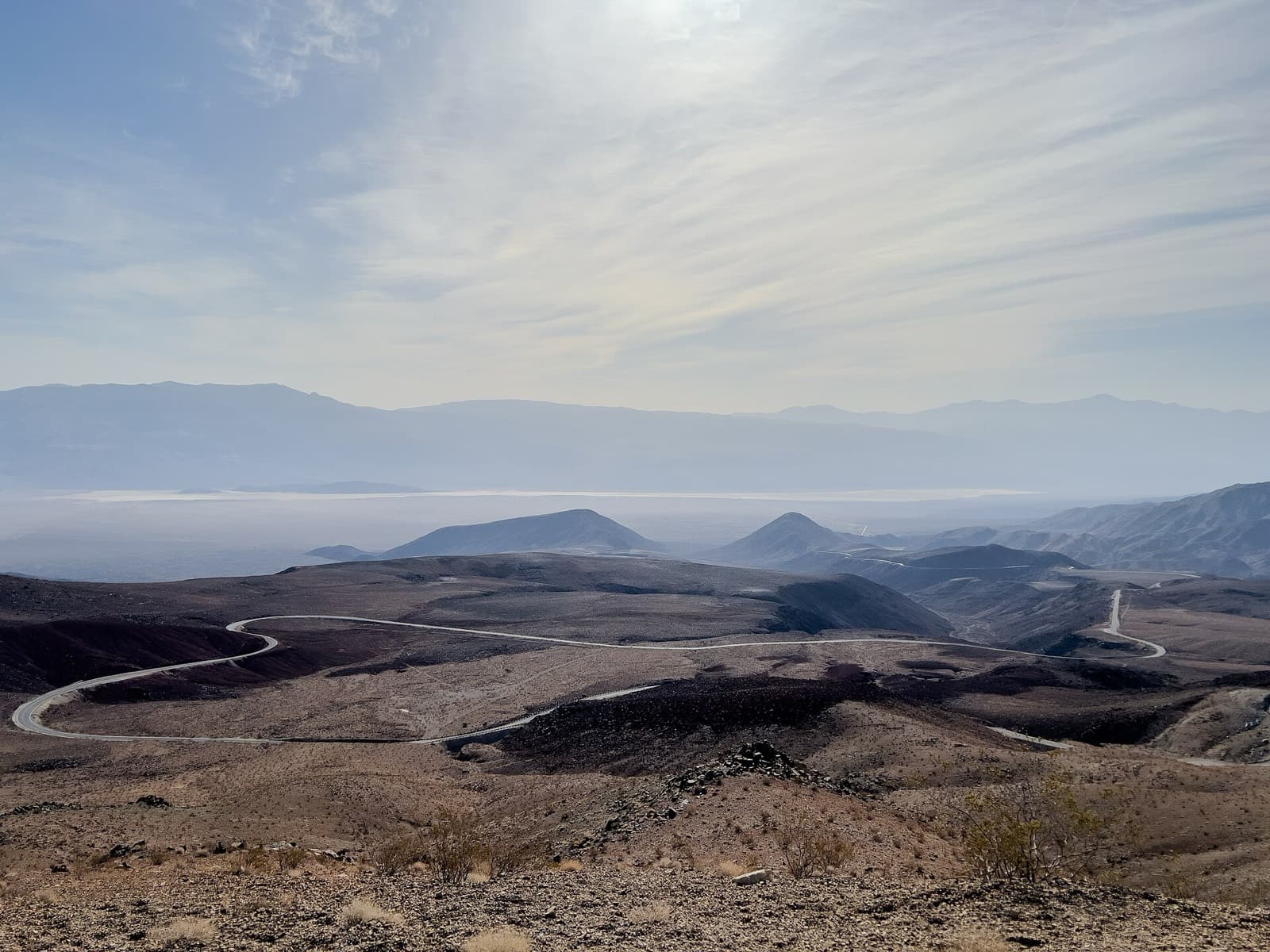
- Distance
- 135 mi (217 km)
- Point to point
- Climbing
- 4,450 m (14,600 ft)
- Rolling: 21 m per km (108 ft per mi)
- Overall cutoff
- 45 hours
- 20:00 per mi (12:26 per km) average
- Finish rate
- 93%
- of starters in 2026
Why runners love it
- 217 km (135 mi) from 86 m (282 ft) below sea level to 2,548 m (8,360 ft)
- Crew is with you the whole way; pacers allowed from Stovepipe Wells at 68 km (mile 42)
- 88 of 95 listed starters finished in 2026 (93%)
- Four cutoffs and a 45 h limit; the organiser says runners usually reach cutoffs hours early
- Course records of 21:33 (Ishikawa) and 21:44 (Paulson)
Watch out for
- Invitation only: about 100 places, a strict qualifying standard and a $1,695 fee
- Midday about 47 C (117 F) and nights above 38 C (100 F)
- A crew vehicle with 2 to 4 crew is mandatory; there are no aid stations or drop bags
- Fixed clock-time cutoffs: 10:00 Tuesday at 82 km (mile 50.8) gives later waves only 12 to 13 h
- Shared two-lane highway with traffic, park fees and strict crew vehicle rules
Race
How runners feel about it, how well it is run, and the community around it. Counts for 25% of the overall score.
Toughness for its distance: Extreme
- Runner satisfactionLoved4.2
Called the world's toughest foot race, with 93% of listed starters finishing in 2026; runners praise the organisation and note the cost and heat. · Medium confidence
- OrganizationFlawless4.6
Strict, detailed rules, mandatory briefings and drug testing; a coach who crewed said the organisation impressed her most. · Medium confidence
- Community and vibeWarm4.1
Crew-centred shared effort with a pizza party for finishers and crew; few runners have written about the atmosphere. · Low confidence
Support
Aid stations, crew access, drop bags and pacer rules. Counts for 25% of the overall score.
- Aid stationsStandard3.0
No aid stations; your crew vehicle leapfrogs about every 3 km (2 mi), so support is continuous but only as good as your crew. · Medium confidence
- Crew accessEvery lap4.8
Crew is mandatory and with you along all 217 km (135 mi); vehicle size and roadside parking rules apply. · High confidence
- Drop bagsOne or two1.5
No drop bags; everything rides in your crew vehicle. · High confidence
- PacersMuch of the race4.2
Pacers allowed from Stovepipe Wells at 68 km (mile 42), about 150 km (93 mi) of the course; crew usually paces. · High confidence
Course
Course marking, scenery, and how runners rate the trail itself. Counts for 15% of the overall score.
- Course markingImpossible to miss4.9
One highway from Death Valley to Whitney Portal. · High confidence
- ScenerySpectacular4.6
Badwater Basin, dunes, Panamint Valley and the climb to Whitney Portal. · Medium confidence
- Trail experienceFine3.2
Road shared with traffic and little shade, with nights above 38 C (100 F), though runners rave about the challenge. · Medium confidence
Course traits, not part of the score
- FootingSmooth4.8
Paved road throughout, shared with traffic and without a wide shoulder in places. · High confidence
- RunnabilityMostly runnable4.0
The road is runnable, but heat and three big climbs force walking. · Medium confidence
- ClimbingGently rolling3.5
Climbs 108 ft per mi (20 m per km), from the official elevation gain. · High confidence
Conditions
Race-day temperature and how predictable the weather is. Counts for 14% of the overall score.
- Race-day temperatureExtreme1.0
Midday about 47 C (117 F) in 2025 and nights above 38 C (100 F). · High confidence
- Weather reliabilityReliable4.3
Extreme July heat is predictable; one year (2016) was rerouted. · Medium confidence
Course traits, not part of the score
- AltitudeModerate3.3
Starts 86 m (282 ft) below sea level and finishes at 2,548 m (8,360 ft), with Townes Pass and Father Crowley climbs between. · Medium confidence
Cutoffs
How generous the overall and intermediate cutoffs are for the terrain. Counts for 13% of the overall score.
- Overall cutoffGenerous3.8
45 h for 217 km (135 mi) is about 4.8 km (3 mi)/h (3 mph) through extreme heat; 93% of listed starters finished in 2026. · Medium confidence
- Intermediate cutoffsGenerous3.5
Four cutoffs at fixed clock times, so later waves get less time: the first, at 82 km (mile 50.8), allows 12 to 14 h. · Medium confidence
Intermediate cutoffs (2027)
| Where | Distance | Cutoff |
|---|---|---|
| Mile 50.8 (2,000 ft elevation sign) | 82 km (51 mi) | 10:00 Tuesday for all waves (14, 13 or 12 h after the 20:00, 21:00 or 22:00 start) |
| Mile 72.8, Panamint Springs | 117 km (73 mi) | 19:00 Tuesday for all waves (23, 22 or 21 h after start) |
| Mile 90.7, Darwin turn-off | 146 km (91 mi) | 03:30 Wednesday for all waves (31.5, 30.5 or 29.5 h after start) |
| Mile 122.8, Lone Pine | 198 km (123 mi) | 40 h from your own start |
Not part of the score
- First timer friendlyExperts only1.2
Entry requires earlier 100 mi finishes and a crew; extreme heat makes it a poor first ultra. · High confidence
- Getting inLong-odds lottery1.0
Invitational with about 100 places, a strict qualifying standard and a $1,695 fee. · High confidence
Stay and travel
Getting there, places to stay, race-day logistics and value. Counts for 8% of the overall score.
- Travel easeAwkward2.3
Remote; crews fly to Las Vegas and drive, and the distance was not checked. · Low confidence
- Places to stayLimited2.0
Lone Pine motels fill up; crews also stay at Stovepipe Wells and Panamint Springs. · Medium confidence
- LogisticsComplex1.4
Point to point with vehicle rules, 2 to 4 crew, check-in, meetings and a park fee. · High confidence
- ValuePricey2.4
$1,695 plus a crew vehicle, lodging and airfare that can cost thousands more. · Medium confidence
Key facts
Checked against the 2027 edition on the official race site. Rules change, so confirm before you enter. Blank means the race does not publish it.
- Location
- Death Valley to Lone Pine, California, United States
- Region
- West Coast
- Typical month
- July
- Latest or next date
- 19 July 2027
- Start time
- 20:00
- First held
- 1987
- Distance
- 135 mi (217 km)
- Course shape
- Point to point
- Surface
- Road: Paved two-lane highways shared with traffic, little or no shade; runners run single file on the left facing traffic.
- Footing
- Official schedule page: 14,600 ft (4,450 m) of cumulative ascent and 6,100 ft (1,859 m) of descent across three mountain ranges. Start about 282 ft (86 m) below sea level; finish at Whitney Portal about 8,360 ft (2,548 m), though the same page also gives 8,300 ft (2,530 m). Three major climbs: Townes Pass, Father Crowley (mile 72.8 to 84.9) and Whitney Portal Road.
- Elevation gain
- 4,450 m (14,600 ft)
- Climbing rate
- 21 m per km (108 ft per mi)
- High point
- 2,548 m (8,360 ft)
- Overall cutoff
- 45 hours
- Pace to make the cutoff
- 20:00 per mi (12:26 per km)
- Cutoff notes
- Three waves start 20:00, 21:00 and 22:00 Monday. The first three cutoffs are fixed clock times for every wave; the Lone Pine cutoff and the 45 h limit run from each wave's start. The page gives slightly different mileages for the checkpoints in two places, so confirm with the race office.
- Aid stations
- 0
- Drop bags
- None
- Crew access
- Many points
- Pacers
- Not allowed before Stovepipe Wells (mi 42, 68 km); runners 65+ may pace from mi 3.5
- Support notes
- No aid stations: each runner needs a crew vehicle with 2 to 4 crew that leapfrogs the runner. Four official time checkpoints (mi 50.8, 72.8, 90.7, 122.8). Crew parking only off the road; stops on Father Crowley limited to eight designated spots.
- Water crossings
- None
- Night running
- Two or more nights
- Mandatory gear
- Crew vehicle with Class 3 reflective garments for crew, 360-degree reflectivity and front and rear blinking lights at night, at least eight personal portable toilet products, $1 sealed envelope, declared shoes
- Entry
- Invite
- Qualifier needed
- Apply Jan 2 to Jan 20; must have finished Badwater 135 in the prior year plus a 50 mi, or at least four 100 mi finishes with one in the qualifying window; selection is merit-based
- Entry fee
- About $1,695
- Fee notes
- Refund of $500 less until May 1 on written request; $1,595 back for raising at least $8,000 for Challenged Athletes Foundation
- Field size
- About 100 runners
- Finish rate
- 93% of starters in 2026
- Air temperature
- 38–49 °C (100–120 °F)
- Weather notes
- 2025 midday reached 47 C (117 F) per Wikipedia; night temperatures stayed above 38 C (100 F) per a 2025 crew report. Reports rate 116 to 118 F (47 C) as 'cool'.
- Nearest airport
- LAS
- Stay notes
- Lone Pine motels host check-in and finish gatherings; crews stay at Stovepipe Wells, Panamint Springs and Lone Pine and fly via Las Vegas per reports. Airport distance not verified.
- Course record (men)
- 21:33:01 Yoshihiko Ishikawa (2019)
- Course record (women)
- 21:44:35 Ashley Paulson (2023)
Races like this
See every race ranked by likenessClosest on distance, course shape, climbing, footing, region and season.
Stateline, NV
Also 200 mi+ · Point to point or one big loop · Same time of year
Olympic Valley, CA
Point to point or one big loop · Also in the West Coast · Same time of year
Woodstock, VA
Point to point or one big loop · Same time of year
What runners and reviewers say
- Badwater.com Lessons Learned (Amanda McIntosh)Raced 2010 · article · Positive
A coach who paced and crewed. About 49 C (120 F) on arrival, around 43 C (110 F) during her shift, constant cooling effort, strict race and traffic rules, strong organization. Capped breaks at five minutes. About 80 runners and 400 crew that year.
“Badwater takes cooling to a whole new level.”
- myRaceKit (Rebeca)Raced 2019 · blog · Positive
A crew member's account: crew is compulsory, pacers allowed after 68 km (42 mi), road shared with traffic, some narrow steep sections with no shoulder. Furnace Creek 53 C and nights near 50 C in her report. About 4,450 m (14,600 ft) of climbing; field capped at 100.
“once you overheat it is almost impossible to cool down”
- On (Paul Snyder)Raced 2019 · article · Mixed
Describes a self-supported effort: rented minivan stops about every 1.6 km (1 mi), two-lane highways with little shade, about 13,000 ft (3,960 m) of climb, nights never below 32 C (90 F), entry $1,595 plus thousands in crew costs, motels in Lone Pine.
- Outside Online, crewing BadwaterRaced 2025 · article · Positive
2025 crew account: up to four crew, the vehicle is the only aid station, pacing after Stovepipe Wells, 47 C (116 to 118 F) days called cool, nights above 38 C (100 F), about 30 sleepless hours, nearest hospital about 160 km (100 mi) away.
- James Ron (Substack)blog · Mixed
A DNF at Panamint Springs, around a quarter of the way. Crew of six, only two experienced after two dropped out; pacers misted runners constantly. Planned lodging at Stovepipe Wells, Panamint Springs and Lone Pine; notes crew vehicles and entry crew-experience requirement.
Show 3 more
- Educated Guesswork (Eric Rescorla)Raced 2024 · blog · Mixed
A crew mention in a different race report: Badwater has no aid stations, the crew follows in a van and feeds the runner, and crews often pull all-nighters in 'unbelievably hot' conditions. Thin evidence.
“Badwater logistics are nuts.”
- Wikipedia, 2025 Badwater 135Raced 2025 · aggregator · Positive
Records the July 7 to 9 2025 race from Badwater Basin to Whitney Portal, midday 47 C (117 F), winners Simen Holvik (21:47:45) and Marisa Lizak (25:07:31).
- Badwater.com 2027 schedule and rulesRaced 2027 · article · Mixed
Official: invitational, application Jan 2 to 20, 100 to 102 invitees, $1,695 fee, four cutoffs, 45 h limit, crew rules, pacers from mile 42.
Ran Badwater 135? Your notes on the footing, cutoffs and aid stations help the next runner decide.
Sources
Pages we used for facts and ratings.
Training for Badwater 135? Moku Coach builds your plan around race day.