Javelina Jundred 100 Mile
Fountain Hills, Arizona · October · 100 mi
- Distance
- 100 mi (161 km)
- Loop course
- Climbing
- 1,919 m (6,300 ft)
- Rolling: 12 m per km (63 ft per mi)
- Overall cutoff
- 30 hours
- 18:00 per mi (11:11 per km) average
- Finish rate
- 64%
- of starters in 2025
Why runners love it
- Five loops with crew at one spot, so crew sees the runner about five times.
- Western States Golden Ticket race: top two men and top two women earn 2027 entry.
- Low climbing for a 100: 1,919 m (6,296 ft) over 161 km (100 mi), mostly runnable single-track.
- Costume and tent-city party atmosphere at the start/finish, called Javelina Jeadquarters.
- Start loop 5 by 24 hours elapsed at mile 80.65 (129.8 km); finish limit is 30 hours.
Watch out for
- Heat is the main killer: 52% finished in 2016 and about 64% in 2025.
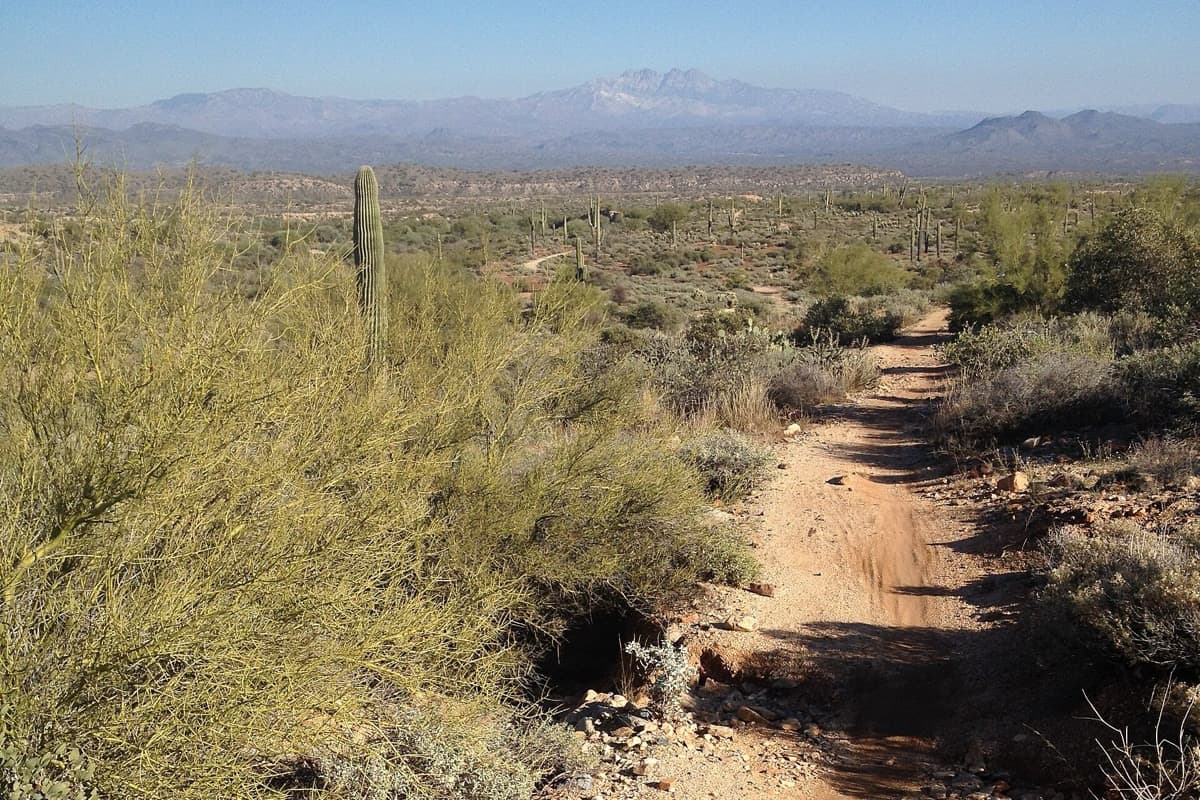
- Rocky, dusty single-track with cactus; the rockiest section wears on tired runners each lap.
- Loops alternate direction and repeat; some runners find the format monotonous.
- Cupless race, and poles are banned for the first two loops except special circumstances.
- Pacers only after 98.5 km (61.2 mi) or sunset, one at a time.
Race
How runners feel about it, how well it is run, and the community around it. Counts for 25% of the overall score.
Toughness for its distance: Tough
- Runner satisfactionLoved4.1
Reports are warm (8.5 out of 10, one of the most fun races), tempered by heat attrition and loop monotony. · Medium confidence
- OrganizationWell run4.4
Reports call Aravaipa's logistics very well run, with four stocked stations per loop. · Medium confidence
- Community and vibeLegendary4.7
Costumes, a tent city of 300+ tents and party-style stations show up in reports from 2016 to 2020. · High confidence
Support
Aid stations, crew access, drop bags and pacer rules. Counts for 25% of the overall score.
- Aid stationsGood3.8
Four stations per 31 km (19.45 mi) loop, longest gap 10.6 km (6.6 mi); ice, sponges and varied food praised. · Medium confidence
- Crew accessEvery lap4.8
Crew waits at one spot and sees the runner about five times; no driving between points. · High confidence
- Drop bagsMany stations4.2
A bag at Jeadquarters every loop, about every 31 km (19.45 mi), plus one remote bag at Jackass Junction. · Medium confidence
- PacersMuch of the race4.0
One pacer at a time from 98.5 km (61.2 mi) or sunset, so roughly the last 40% of the race. · High confidence
Course
Course marking, scenery, and how runners rate the trail itself. Counts for 15% of the overall score.
- Course markingClear4.3
Wide, repeated loop; no wrong-turn complaints found, but few reports speak to marking directly. · Low confidence
- SceneryPleasant3.0
Pleasant Sonoran desert with saguaro and mountain views, but five laps of the same terrain. · Medium confidence
- Trail experienceFine3.2
Fun and runnable, but dusty, crowded on loop one, and the rocky section grows tiresome each lap. · Medium confidence
Course traits, not part of the score
- FootingModerate3.1
Hard-packed granite, sand and a rockier stretch that worsens each lap; runners report falls on rocky downhill. · Medium confidence
- RunnabilityMostly runnable4.4
Almost all runnable per reports, with few climbs; the rocky stretch from Coyote Camp to Jackass Junction slows tired legs. · High confidence
- ClimbingFlat4.5
Climbs 63 ft per mi (12 m per km), from the official elevation gain. · High confidence
Conditions
Race-day temperature and how predictable the weather is. Counts for 14% of the overall score.
- Race-day temperatureWarm or cold3.2
Highs of 25 to 29 °C (77 to 85 °F) are typical, up to 35 °C (95 °F) in hot years; no shade, cool nights. · Medium confidence
- Weather reliabilityVariable3.4
Mostly dry and predictable, but a 2016 heat wave dropped finishing to 52% and one past year brought rain and mud. · Medium confidence
Course traits, not part of the score
- AltitudeLow4.2
The race gives no elevation; it is a Phoenix-area desert park, likely well below 1,000 m (3,300 ft), not confirmed. · Low confidence
Cutoffs
How generous the overall and intermediate cutoffs are for the terrain. Counts for 13% of the overall score.
- Overall cutoffGenerous4.3
30 hours for 161 km (100 mi) with only 1,919 m (6,296 ft) of gain is generous; attrition comes from heat, not the clock. · Medium confidence
- Intermediate cutoffsRarely bite4.6
Only one published: start loop 5 at mile 80.65 (129.8 km) by 24 hours elapsed; none are listed for loops 2 to 4. · High confidence
Intermediate cutoffs (2026)
| Where | Distance | Cutoff |
|---|---|---|
| Start of Loop 5 (mile 80.65) | 130 km (81 mi) | 24:00 elapsed (06:00 Sunday for Wave 1; 06:30 for Wave 2) |
Not part of the score
- First timer friendlyFriendly3.9
Low climbing, one crew spot and simple loops suit a first 100, but heat held finishing to 52% to 64% in several years. · Medium confidence
- Getting inUsually open3.5
Open UltraSignup entry with a waitlist and no qualifier; a 2017 report found spots open weeks out, but the Golden Ticket may raise demand. · Low confidence
Stay and travel
Getting there, places to stay, race-day logistics and value. Counts for 8% of the overall score.
- Travel easeVery easy4.6
Phoenix Sky Harbor is the big airport; one report puts the park about 45 minutes away (not on the race site). · Low confidence
- Places to stayGood4.0
Camping at the start/finish, plus hotels that were easy to book per a 2017 report. · Medium confidence
- LogisticsVery simple4.8
One start/finish, crew base and drop bag at the same place; park and run. · High confidence
- ValueFair3.3
$525 is on the high side, but reports praise the support, expo and party; no direct value comments found. · Low confidence
Key facts
Checked against the 2026 edition on the official race site. Rules change, so confirm before you enter. Blank means the race does not publish it.
- Location
- Fountain Hills, Arizona, United States
- Region
- Mountain West
- Typical month
- October
- Latest or next date
- 31 October 2026
- Start time
- 06:00
- Distance
- 100 mi (161 km)
- Course shape
- Loop course, 5 laps of 31 km (19 mi)
- Surface
- Trail: Desert singletrack in McDowell Mountain Regional Park, hard-packed with granite, rocks and sand (Pemberton Trail loop). Five loops: one of 22.3 mi (35.9 km) then four of 19.45 mi (31.3 km); direction alternates each loop per race reports.
- Footing
- Rocky, dusty singletrack with cactus beside the trail. Runners report a rockier section (Coyote Camp to Jackass Junction) that wears on tired legs each lap. Elevation gain is 6,296 ft (1,919 m) for 100 mi (161 km). The official page does not give a high point.
- Elevation gain
- 1,919 m (6,300 ft)
- Climbing rate
- 12 m per km (63 ft per mi)
- Overall cutoff
- 30 hours
- Pace to make the cutoff
- 18:00 per mi (11:11 per km)
- Cutoff notes
- Official 2026 page: 30 h overall (noon Sunday for the 6:00 am wave, 12:30 pm for the 6:30 am wave). The only intermediate cutoff published is starting loop 5 at 80.65 mi (129.8 km) by 6:00 am Sunday (wave 1) or 6:30 am (wave 2). No cutoffs are published for loops 2 to 4. A finish under 30 h is required for the Western States lottery.
- Aid stations
- 4
- Longest gap between aid
- 11 km (6.6 mi)
- Drop bags
- Some stations
- Crew access
- Every lap
- Pacers
- Allowed after 3 loops (61.2 mi / 98.5 km) or sunset, one at a time
- Support notes
- Four stations per loop: Coyote Camp, Jackass Junction, Rattlesnake Ranch and the start/finish Javelina Jeadquarters. Longest gaps are 6.5 mi (10.5 km) and 6.6 mi (10.6 km). One drop bag at Jeadquarters each loop plus one remote bag at Jackass Junction. Crew only at Jeadquarters ($100 crew space reservation). Cupless race: bring your own cup or bottle. Trekking poles banned in the first two loops except special circumstances.
- Water crossings
- None
- Water notes
- Dry desert washes only in the reports read.
- Night running
- Most runners run through one night
- Mandatory gear
- Bib on front at all times. Headlamp or flashlight recommended for the night (listed in the 31K gear); warm layer suggested for drop bags. Cupless: carry your own cup or bottle.
- Entry
- Open
- Qualifier needed
- None. Registration on UltraSignup with a waitlist; closes Oct 1, 2026. Charity bibs through RunSignup.
- Qualifies for
- Western States (Golden Ticket)
- Entry fee
- About $525
- Finish rate
- 64% of starters in 2025
- Air temperature
- 11–29 °C (52–84 °F)
- Weather notes
- RaceRaves lists Oct 31 historical lows of 51 to 61 F (11 to 16 C) and highs of 77 to 85 F (25 to 29 C) for 2021 to 2025. Hot years hit 93 to 95 F (34 to 35 C) at Jeadquarters (2016) and runners report full sun with no shade. Nights are cool.
- Nearest airport
- PHX
- Stay notes
- Phoenix Sky Harbor is the nearest large airport; one report puts the park about 45 minutes away (not on the race site). Hundreds of tents at the start/finish camp.
Races like this
See every race ranked by likenessClosest on distance, course shape, climbing, footing, region and season.
Huntsville, TX
Also 100 mi · Repeated laps · Similar climbing
What runners and reviewers say
- Team Run Run, StephenRaced 2017 · blog · Positive
First 100 finished in 25:26. Praised well-stocked aid with ice and a lively halfway station, and easy crewing since the course passes the same points every loop. Hot, dry, shadeless, rocky and dusty; loops four and five were a mental struggle and he scored it 8.5 out of 10.
“Everything in the desert wants to hurt you.”
- Pikes Peak Trail Club, Etan LevaviRaced 2018 · blog · Positive
Five loops that reverse direction each time; the longest gap between stations was 6.5 mi (10.5 km). Temperatures reached about 32 C (90 F) at midday and night fell earlier than he expected. In-person crew and smooth logistics carried him through a low point around 50 km (31 mi) to a finish.
“It was time to adopt a new outlook and approach.”
- Team Run Run, Jeff KRaced 2017 · blog · Positive
Describes a party in the desert with Burning Man energy. Easy logistics: start and finish together, crew sees the runner about five times, no lottery and spots were open two weeks out. Downsides are heat around 32 C (90 F), a large field, loop repetition and a roughly 40% DNF rate. Two faceplants on a rocky downhill.
“It is advertised as a great first time 100 mile.”
- Team Run Run, Matt UrbanskiRaced 2017 · blog · Positive
Almost all runnable with no major climbs, but the rocky Coyote Camp to Jackass section gets harder each lap. 27 to 32 C (80 to 90 F), sun and dry air; ice water and sponges helped. Simple travel (Seattle to Phoenix flights, easy hotels, no sell-out) and a festive, slightly weird Halloween atmosphere. Wanted more savory food.
- Aravaipa Running, 2016 recapRaced 2016 · article · Mixed
Official recap of a hot year: Phoenix reached 35 C (95 F) with no cloud, aid stations poured water on runners, and only 52% of the 574 starters finished. The recap blames heat, rolling hills and the loop format, and describes 300+ tents at HQ and widespread Jalloween costumes.
Show 3 more
- MassUltra, Javelina Jundred roundupRaced 2020 · article · Positive
2020 ran as staggered multi-day waves during the pandemic. Of 247 starters in the 100 mile, 160 finished inside the 30 h limit. Describes rocky, sandy desert singletrack, rolling hills, sun and a festive, costumed atmosphere.
- RaceRaves, Javelina JundredRaced 2021 · aggregator · Positive
Rated 5.0 from three reviews. Reviewers praise aid variety, volunteers and the party vibe, call the course very runnable but monotonous in one direction, and warn about heat, cactus, rattlesnakes and bees. Crews base at Jeadquarters; bring a shade structure, no power outlets. Pacers only after dark per one older review (now after 3 loops or sunset).
- UltraSignup results, 2025 100 MileRaced 2025 · aggregator · Mixed
The 2025 results file shows 492 finishers and 283 DNFs in the 100 mile (about 63.5%), and 325 finishers against 66 DNFs in the 100K (about 83%). Confirms that the 100 mile attrition is high despite low vert.
Ran Javelina Jundred 100 Mile? Your notes on the footing, cutoffs and aid stations help the next runner decide.
Sources
Pages we used for facts and ratings.
Training for Javelina Jundred 100 Mile? Moku Coach builds your plan around race day.