Kettle Moraine 100 Mile Endurance Run
La Grange, Wisconsin · June · 100 mi
- Distance
- 100.5 mi (162 km)
- Out and back
- Climbing
- 2,682 m (8,800 ft)
- Rolling: 17 m per km (88 ft per mi)
- Overall cutoff
- 30 hours
- 17:54 per mi (11:07 per km) average
- Finish rate
- 51%
- of starters in 2026
Why runners love it
- Western States qualifier with 65 mi (105 km) on the Ice Age National Scenic Trail.
- Club-hosted stations with ice and cooling; longest gap 8.2 km (5.1 mi).
- Out-and-back layout lets you see other runners both ways from one start/finish at Nordic.
- Drop bags at four stations: Nordic, McMiller, Hwy 67 and Hwy 12.
- Rolling 2,682 m (8,800 ft) of gain with no long climbs; high point about 320 m (1,050 ft).
Watch out for
- Heat and humidity are common in June; 2026 finishing was 51% (112 of 219 starters).
- Hard cutoffs: leave Nordic (mile 64 / 103 km (64 mi)) by about midnight, Rice Lake 6:30 am, Bluff 10:00 am.
- Crew allowed at only six locations; crew at the others can get a runner disqualified.
- Lottery entry plus 8 hours of volunteer service; no 100 mile start time is published online.
- Hwy 12 to Rice Lake is the most technical stretch and is run at night, twice.
Race
How runners feel about it, how well it is run, and the community around it. Counts for 25% of the overall score.
Toughness for its distance: Tough
- Runner satisfactionLoved4.2
Finishers praise the volunteers and Midwest-classic feel; heat is the main complaint, and 51% finished in 2026. · Medium confidence
- OrganizationWell run4.3
Detailed aid, crew and cutoff pages and a relay option; the race director let late runners continue in 2021. · Medium confidence
- Community and vibeWarm4.4
Each station is hosted by a named club or family, and volunteers cool runners with ice and water guns. · Medium confidence
Support
Aid stations, crew access, drop bags and pacer rules. Counts for 25% of the overall score.
- Aid stationsSuperb4.5
12 station locations, most visited twice; longest gap 8.2 km (5.1 mi); real food, ice and sponges. · Medium confidence
- Crew accessSome points3.3
Crew allowed at six locations only, with tight parking; visiting a no-crew station can get a runner disqualified. · High confidence
- Drop bagsMany stations3.8
Bags at four stations (Nordic, McMiller, Hwy 67, Hwy 12), each reached twice, none at Rice Lake or Bluff. · High confidence
- PacersLate race3.2
Pacers can join from Bluff after 6:30 pm, about mile 71 (114 km), so for the last 30 mi (48 km) or so. · High confidence
Course
Course marking, scenery, and how runners rate the trail itself. Counts for 15% of the overall score.
- Course markingClear3.8
A marked Ice Age Trail with GPX files; the race itself warns the McMiller loops are easy to get lost on. · Medium confidence
- SceneryBeautiful3.9
Glacial hills, oak woods, prairie, marsh and lake views at Rice Lake: pleasant rather than dramatic. · Medium confidence
- Trail experienceGreat3.8
Varied single-track and flowy ski trail, but exposed prairie heat, sand and repeated out-and-back sections. · Medium confidence
Course traits, not part of the score
- FootingModerate3.0
Mostly runnable ski trail and single-track, but roots, rocks on Bald Bluff, deep sand and a rocky night stretch to Rice Lake. · Medium confidence
- RunnabilityMostly runnable3.9
About 16.6 m (54.5 ft) per km (87 ft per mi) of rolling hills with few long climbs; most runners walk only the steeper pitches. · Medium confidence
- ClimbingGently rolling4.0
Climbs 88 ft per mi (17 m per km), from the official elevation gain. · High confidence
Conditions
Race-day temperature and how predictable the weather is. Counts for 14% of the overall score.
- Race-day temperatureWarm or cold2.6
June heat and humidity are the norm in race reports, up to 29 °C (85 °F) on open prairie; some years bring heavy rain. · Medium confidence
- Weather reliabilityVariable2.6
Hot and humid in 2002, 2007, 2021 and 2026, deluges in other years, so conditions swing between heat and storms. · Medium confidence
Course traits, not part of the score
- AltitudeSea level4.6
High point about 320 m (1,050 ft) at Bald Bluff; the rest of the course lies below that. · High confidence
Cutoffs
How generous the overall and intermediate cutoffs are for the terrain. Counts for 13% of the overall score.
- Overall cutoffGenerous3.6
30 hours for 161.7 km (100.5 mi) and 2,682 m (8,800 ft) of gain is normal; heat held 2026 finishing to 51%. · Medium confidence
- Intermediate cutoffsGenerous3.6
Stations close on posted clock times, with hard cutoffs at Nordic (mile 64, 103 km (64 mi)), Rice Lake and Bluff; late runners have been let continue. · Medium confidence
Intermediate cutoffs (2026)
| Where | Distance | Cutoff |
|---|---|---|
| Hwy ZZ, mile 34.5 (second pass) | 56 km (34 mi) | station closes 5:30 pm Saturday |
| Hwy 67, mile 36.8 | 59 km (37 mi) | station closes 6:20 pm Saturday |
| Wilton Road, mile 40.1 | 65 km (40 mi) | station closes 7:15 pm Saturday |
| McMiller, mile 44.4 | 72 km (44 mi) | station closes 8:45 pm Saturday |
| Natalie's, mile 48.4 | 78 km (48 mi) | station closes 10:00 pm Saturday |
| Nordic, mile 63.9 (hard cutoff, must leave for the last 38 mi / 61 km) | 103 km (64 mi) | 12:30 am Sunday (race page says 12:25 am; the aid page also says midnight, the original 18 hour limit) |
| Rice Lake, mile 82.2 (hard cutoff) | 132 km (82 mi) | must leave by 6:30 am Sunday |
| Bluff, mile 93.1 (hard cutoff) | 150 km (93 mi) | must leave by 10:00 am Sunday |
Not part of the score
- First timer friendlyFriendly3.6
A common first 100 with modest hills, but heat, 2,682 m (8,800 ft) of gain and a night out-and-back catch many. · Medium confidence
- Getting inHard2.4
Lottery with a waitlist and 8 hours of volunteer service required; past 100 mile fields filled right after opening. · High confidence
Stay and travel
Getting there, places to stay, race-day logistics and value. Counts for 8% of the overall score.
- Travel easeEasy3.8
Milwaukee airport is the nearest large airport and Chicago O'Hare is about 2 hours by car; the race does not publish distances. · Low confidence
- Places to stayBook early3.4
Hotels in nearby towns, but state parks do not allow car camping, so sleeping near the start is limited; book early. · Low confidence
- LogisticsSome complexity3.4
One start/finish at Nordic, but crew restrictions, tight parking and Friday packet pickup add complexity. · Medium confidence
- ValueGood value3.6
$336 early-bird for a Western States qualifier with a field of about 219; the 8 hour volunteer requirement is extra. · Medium confidence
Key facts
Checked against the 2026 edition on the official race site. Rules change, so confirm before you enter. Blank means the race does not publish it.
- Location
- La Grange, Wisconsin, United States
- Region
- Midwest US
- Typical month
- June
- Latest or next date
- 13 June 2026
- First held
- 1996
- Distance
- 100.5 mi (162 km)
- Course shape
- Out and back
- Surface
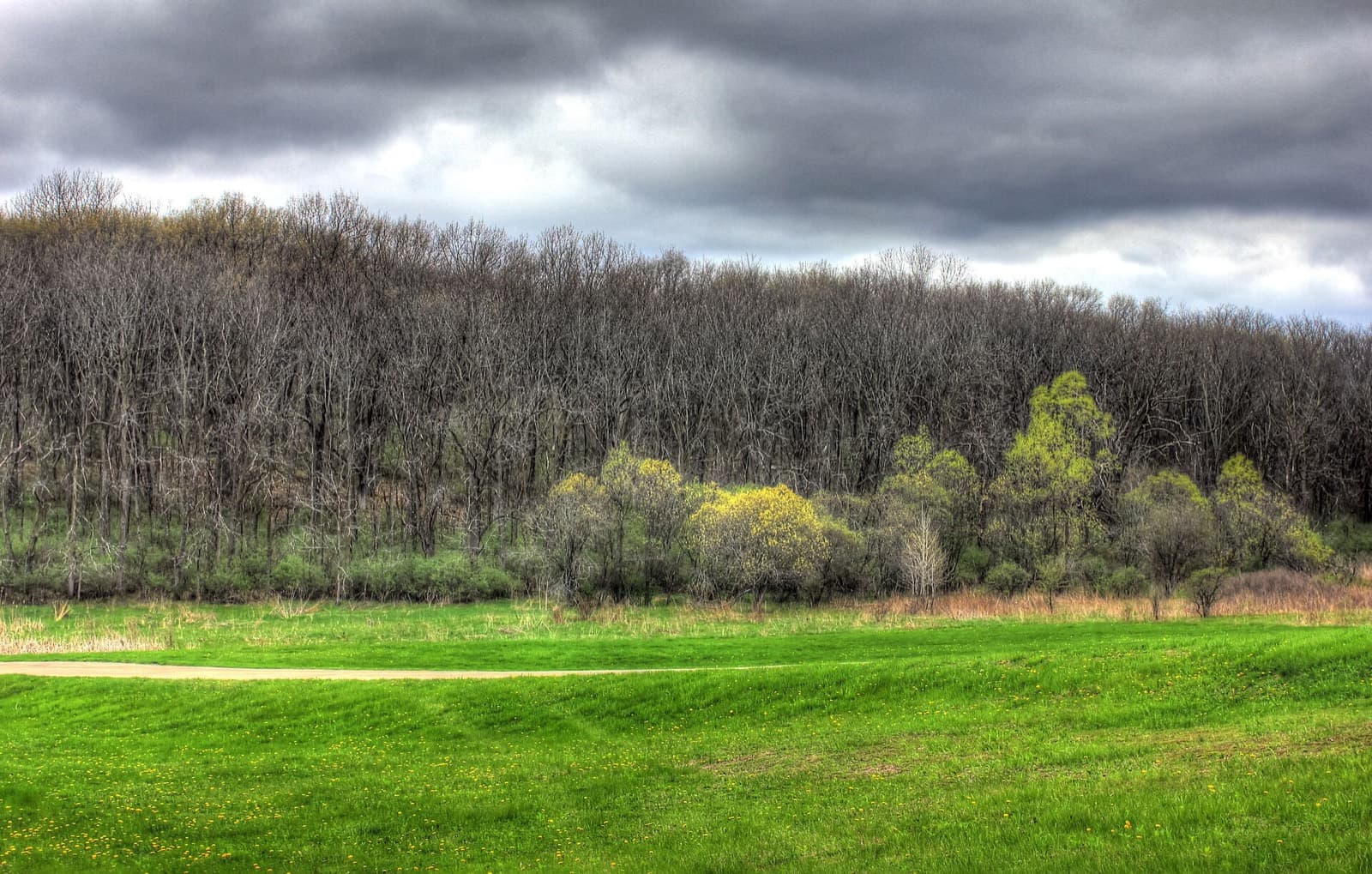
- Trail: 100% trail except a few road crossings; 65 mi (105 km) on the Ice Age Trail. About 80% wooded, the rest prairie or marsh, with some boardwalks and a sandy equestrian trail.
- Footing
- Mix of smooth wide ski-trail and rooty, rocky single-track. Bald Bluff has medium stones on steep climbs, the Eagle Horse Trail is deep loose sand in places, and the Hwy 12 to Rice Lake section (run at night, twice) has large roots and rocks and is widely called the most technical part. Hills are rolling rather than long.
- Elevation gain
- 2,682 m (8,800 ft)
- Climbing rate
- 17 m per km (88 ft per mi)
- High point
- 320 m (1,050 ft)
- Overall cutoff
- 30 hours
- Pace to make the cutoff
- 17:54 per mi (11:07 per km)
- Cutoff notes
- The race calls Nordic, Rice Lake and Bluff hard cutoffs; every other station closes at the time listed and runners must be through before it does. The Nordic time is 12:25 am on the aid page and midnight on the rules text. The 2021 last-place finisher missed two cutoffs and was allowed to continue, but do not plan on that. A 30 hour finish qualifies for Western States.
- Aid stations
- 12
- Longest gap between aid
- 8.2 km (5.1 mi)
- Drop bags
- Some stations
- Crew access
- Some points
- Pacers
- Allowed after 6:30 pm Saturday, from Bluff (about mile 71 / 114 km), then at crew-accessible stations
- Support notes
- 12 named station locations on the 2026 chart (Nordic, Tamarack, Bluff, Horseriders, Natalie's, McMiller, Wilton Rd, Hwy 67, Hwy ZZ, Duffin Rd, Hwy 12, Rice Lake), most visited twice. Longest gap on the official mileage sheet is 5.1 mi (8.2 km). Drop bags at Nordic, McMiller, Hwy 67 and Hwy 12 (bag about 20 x 15 x 10 in / 51 x 38 x 25 cm). Crew only at Nordic, McMiller, Hwy 67, Hwy ZZ/Scuppernong, Hwy 12 and Rice Lake; crew at no-crew stations means disqualification. Parking is tight and four tires must be off the road. One pacer on course at a time but a runner may use several; pacers sign a waiver online.
- Water crossings
- None
- Water notes
- No crossings mentioned; the Ice Age Trail section has boardwalks over marsh.
- Night running
- Most runners run through one night
- Entry
- Lottery
- Qualifies for
- Western States
- Entry fee
- About $336
- Fee notes
- Early-bird price listed on UltraSignup for 2026; later price not shown.
- Field size
- About 219 runners
- Sells out
- days
- Finish rate
- 51% of starters in 2026
- Air temperature
- 16–30 °C (61–86 °F)
- Weather notes
- Reports from 2002, 2007, 2021 and 2026 describe hot, humid June days, with open prairie much hotter than the woods (one blogger saw 85 F / 29 C versus 70 F / 21 C in town). Heavy rain and storms hit other years. Range is from race reports, not an official figure.
- Nearest airport
- MKE
- Stay notes
- Milwaukee Mitchell is the nearest large airport and Chicago O'Hare is about 2 hours by car (neither distance is on the race site). Hotels in Whitewater, Eagle, Elkhorn and Burlington; state parks do not allow car camping, including the Nordic lot.
- Course record (men)
- 14:15:22 (Reese Slobodianuk, 2025)
- Course record (women)
- 16:58:18 (Michelle Magagna, 2022)
Races like this
See every race ranked by likenessClosest on distance, course shape, climbing, footing, region and season.
Cuyahoga Falls, OH
Also 100 mi · Out and back · Similar climbing
What runners and reviewers say
- Kettle Moraine 100 race site (2021 report by Arnaud Daix)Raced 2021 · blog · Positive
Second 100 for a last-place finisher in 33:54. Start was in the 60s F (about 16 to 20 C) at 100% humidity and he overheated. Hidden holes in prairie grass and relentless small hills wore him down, and volunteers cooled him with ice and a cold-water gun at Hwy 67. He missed two cutoffs, the race director let him continue anyway, and he finished.
“Dead last! But finisher!”
- Run SpiritedRaced 2024 · blog · Positive
A runner's 2024 review: finished in 28:38, his slowest 100, and earned a Western States qualifier. The race site estimates 8,800 ft (2,682 m) of climbing and his watch read about 9,700 ft (2,957 m). Three crew members handled aid stops and paced the final 38 mi (61 km). He called it the most challenging 100 since his first and mostly single-track.
- Kettle Moraine 100 race site (First 100 miler 2002)Raced 2002 · blog · Positive
A first-100 report from 2002: a cool morning turned hot and cloudless, exposed meadows were brutal, and only 38 of 83 starters finished. Stations had ice, sponges, sunscreen and pancakes at the last stop; crew helped at every crew-accessible station and a pacer ran from mile 62 (100 km). Course has shaded woods, rough roots and rocks, and hilly ski trails late.
- Kettle Moraine 100 race site (Chris Harrison 2007)Raced 2007 · blog · Positive
A first-time 100 finisher in 21:34 describes heavy rain the night before, then heat and high humidity on the open prairie, with about 50 runners dropping at Nordic. Aid stations were numbered with drop bags at several and real food like sandwiches and soup. The forested single-track near Nordic was the most technical part at night.
- UltraRunning Magazine weekend recap, 14 June 2026Raced 2026 · article · Mixed
Recap of the 13 June 2026 race: Dustin Trampe won in 17:19 and Laura Stanley led the women in 25:07. Of 219 starters, 112 finished under the 30 hour cutoff and earned buckles, a 51% finish rate. Weather detail was not read (page blocked); only the figures above came from the search listing.
Show 4 more
- UltraRunning Magazine (DNF story)article · Mixed
A first-person DNF account. Describes the race as two out-and-back sections with the first and last stretches repeated, and warns about the exposed, hot meadow miles on the Ice Age Trail, recommending hydration and topical cooling. The page itself could not be opened, so details come from the search listing only.
- Kettle Moraine 100 race site (course by section, 2021)Raced 2021 · article · Mixed
The race's own section-by-section tour. Bluff to Horseriders is the hardest leg (over 700 ft / 213 m (699 ft) of gain, steep rocky Bald Bluff). There is over 2 mi (3 km) of exposed prairie near Wilton Rd, sand and rocks on the Eagle Horse Trail, and the Hwy 12 to Rice Lake stretch is the most technical, run at night. Warns that the McMiller loops are easy to get lost on.
- Wikipedia, Kettle Moraine 100 Endurance Runsaggregator · Positive
Overview: two out-and-back legs of 62.9 and 37.3 mi (101.2 and 60.0 km (37.3 mi)), about 80% wooded, 65 mi (105 km) shared with the Ice Age Trail, 30 hour limit and about 8,800 ft (2,682 m) gain. Some counts on the page (aid station numbers, records) look out of date against the 2026 race pages.
- UltraSignup event pageRaced 2026 · aggregator · Mixed
2026 listing: lottery entry with a 1 to 30 December sign-up, a $336 early-bird fee, a waitlist released in batches of five, and a requirement of 8 hours of local volunteer service. Finishing in 30 hours qualifies for Western States. No refunds or transfers.
Ran Kettle Moraine 100 Mile Endurance Run? Your notes on the footing, cutoffs and aid stations help the next runner decide.
Sources
Pages we used for facts and ratings.
Training for Kettle Moraine 100 Mile Endurance Run? Moku Coach builds your plan around race day.