Tunnel Hill 100

Overall score 3.9Very good
Moderate evidence5 sources#15 of 95 ultras · Top 16%

Vienna, Illinois · Race day Sat 14 Nov 2026

Is it right for you?

Footing
Smooth4.7
Climbing
Flat5.0
Overall cutoff
Generous4.4
Intermediate cutoffs
Generous3.9
Crew access
Every lap4.6
First timer friendly
Friendly4.2

Footing and climbing are course traits: 5 is the smoother, flatter end, not a better race.

Watch out: The race says fewer than half of 100 mi starters finish the full distance; many drop to 50 mi. All 5

Race website (opens in a new tab)

Score breakdown

Every score is out of 5, and 5 is always the better end.

Top 16%. Better than 84% of the 95 races.

Each bar is a range of 0.25 points; the light bar holds this race. The average race scores 3.4.

What does this score mean?

moderate5 sources behind this score: runner reviews and race reports. Moderate evidence is 5 to 9 separate sources.

Why runners love it

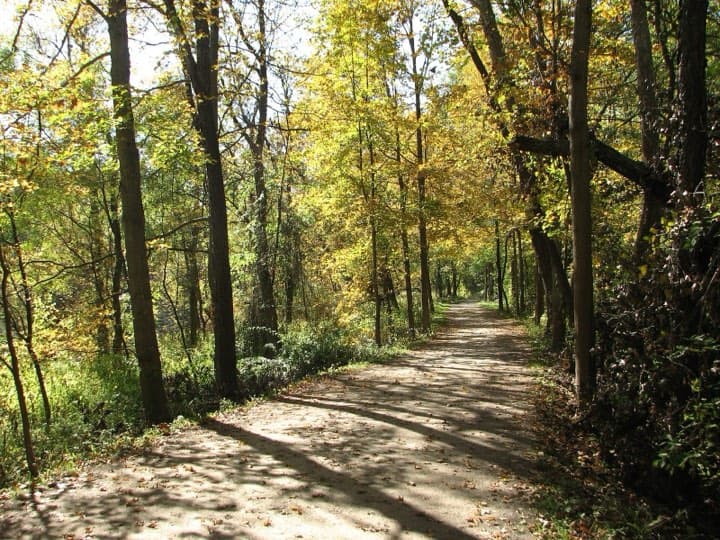
  • Crushed limestone rail trail with a 2 percent maximum grade and about 549 m (1,800 ft) of gain.
  • Staffed stops every 2.6 to 6.9 mi (4.2 to 11.1 km), with burgers, wraps and a heated night tent.
  • Crew and spectators can see runners repeatedly at Vienna, Karnak and Tunnel Hill.
  • A 30 h limit, with a 15 h cutoff at mile 50 (80.5 km), on a flat course.
  • Finishing the 100 counted for the 2028 Western States lottery; sub-16, 20 and 24 h buckles.

Watch out for

  • The race says fewer than half of 100 mi starters finish the full distance; many drop to 50 mi.
  • Nights drop to about -6 to 7 °C (22 to 44 °F); one first-timer shivered at every aid stop.
  • Repeated out-and-backs on hard limestone: sore hips and knees, and boredom by mile 35 (56 km).
  • Breeden Trestle is unmanned and water only, with no cups; a headlamp is required for the tunnel and night.
  • Remote southern Illinois: the race lists no airport; one reviewer drove about 4.5 h from Chicago.

Latest or next race

Sat 14 Nov 2026

Official race site(tunnelhill100.com, opens in a new tab)
Climbing
549 m (1,800 ft)
Cutoff
30 hours
Pace needed
18:00 per mi (11:11 per km)
Air
-6–24 °C (21–75 °F)
First held
2014
Men's course record
11:21:32 (Phil Young, 2026, per UltraSignup results; the race site still lists 11:26:19 by Elov Olsson, 2023)
Women's course record
12:37:04 (Caitriona Jennings, 2025; world record at the time)
Median finish
23.6 h (2026, UltraSignup 100 mi finishers; 96 of 184 finished under 24 h)

Training for Tunnel Hill 100?

Moku Coach builds your plan around race day in November and this course.

Start free trial

What runners say

Overall score 3.9 out of 5

5 reviews and race reports

Tone of the reviews and race reports

  • Positive4
  • Mixed1
  • Negative0
Ran Tunnel Hill 100? Rate it

Pick a score, then tell the next runner about the footing, cutoffs and aid stations.

Review highlights

5 reviews

  • cjs909, Joerobe, RunningNutMeg and others

    Raced 2026 · RaceRaves (runner reviews)

    Tone: Positive

    “I couldn’t have picked a more perfect race for a first timer.”

    Reviews from 2018 to 2026 give difficulty 1 to 2 out of 5 and production 4 to 5. A 2026 first-100 runner finished well inside 24 h but underestimated overnight lows in the mid-20s F (about -4 °C) and shivered at stops. A repeat runner calls the limestone punishing on hips, knees and ankles and was bored by mile 35 (56 km) of a 100 mi attempt, but rates production outstanding.

    Covers Support, Course, Conditions

    Read on raceraves.com (RaceRaves (runner reviews), opens in a new tab)
  • Justin Mock

    Raced 2022 · iRunFar

    Tone: Mixed

    Weekly column on a cold, snowy race: the women's winner Jill Wojta ran 14:59:29 with 31 seconds to spare under 15 h, and Phil Young won the men's race alone at the front in 13:32 while pacing toward a sub-12 h finish.

    Covers Conditions

    Read on irunfar.com (iRunFar, opens in a new tab)
  • Justin Mock

    Raced 2021 · iRunFar

    Tone: Positive

    “Tunnel Hill 100 Mile is the place to run fast.”

    Weekly column noting the 100 mi totals just 1,400 ft (427 m) of gain. Stefanie Flippin won in 14:04; Phil Young beat Zach Bitter late for the men's win, as part of a deep, fast field.

    Covers Course

    Read on irunfar.com (iRunFar, opens in a new tab)
  • Justin Mock

    Raced 2018 · iRunFar

    Tone: Positive

    Weekly column on Zach Bitter's 12:08 100 mi trail world best on the rails-to-trails course. Says cold weather probably dulled finish times that year and describes the race as flat and fast, quickly becoming a target for fast times.

    Covers Conditions

    Read on irunfar.com (iRunFar, opens in a new tab)

Scores

Open a category for its ratings and the evidence behind them.

Very good. How runners feel about it, how well it is run, and the community around it. Counts for 25% of the overall score.

Toughness for its distance: Moderate

  • Runner satisfactionLoved4.3

    Runners praise the production, fast times and first-100 friendliness; the complaints are repetition and pounding on hard limestone. · Medium confidence

  • OrganizationFlawless4.6

    Timing at aid stations, a printed manual, drop bags moved between stations and a heated night tent; reviewers call the production outstanding. · Medium confidence

  • Community and vibeWarm4.0

    Free runner dinner and volunteer-run stations, but a large elite field makes it feel more like an event than a family race. · Low confidence

Excellent. Aid stations, crew access, drop bags and pacer rules. Counts for 25% of the overall score.

  • Aid stationsGood4.2

    Staffed stops every 2.6 to 6.9 mi (4.2 to 11.1 km) with burgers, wraps, soup and a heated night tent; one water-only point. · High confidence

  • Crew accessEvery lap4.6

    Crew reaches Vienna, Karnak, Tunnel Hill and the south turnaround; Heron Pond and Shelby Road are limited. · High confidence

  • Drop bagsMany stations4.0

    Bags at Vienna, Karnak and Tunnel Hill, each passed several times; none at the other stations. · High confidence

  • PacersMuch of the race4.3

    Pacers from mile 50 (80.5 km) or dark, about 17:00, and the final 24 mi (39 km); one at a time, $15 fee. · High confidence

Good. Course marking, scenery, and how runners rate the trail itself. Counts for 15% of the overall score.

  • Course markingImpossible to miss4.9

    Straight rail trail with signed stations and turnarounds; a 2017 reviewer says there is no getting lost. · High confidence

  • SceneryPleasant3.4

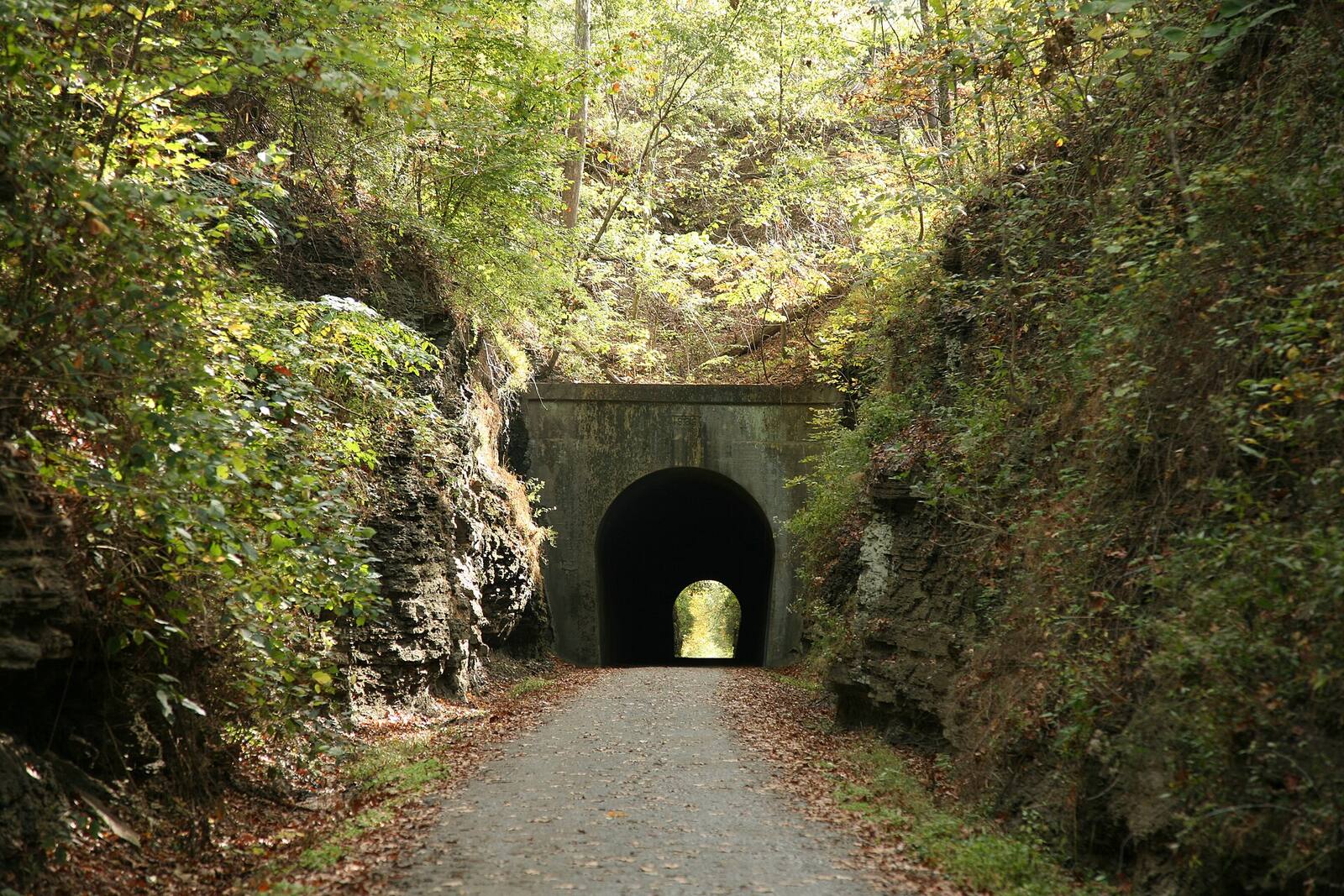
    Southern Illinois wetlands, hardwood forest, rock cuts, trestles and a 543 ft (166 m) tunnel; reviewers rate scenery 3 to 5 out of 5. · Medium confidence

  • Trail experienceFine3.2

    Two out-and-backs repeated: some runners find it easy to chunk, others call 100 mi (161 km) of hard surface monotonous. · Medium confidence

Course traits, not part of the score

  • FootingSmooth4.7

    Crushed limestone with a little concrete; no roots, rocks or stream crossings, and a dark tunnel needing a light. · High confidence

  • RunnabilityRunnable4.7

    Maximum grade 2 percent; the 100 mi record is 11:21:32 (2026). · High confidence

  • ClimbingFlat5.0

    About 1,800 ft (549 m) over 100 mi (161 km), roughly 3.4 m (11.2 ft) per km (18 ft per mi). · High confidence

Very good. Race-day temperature and how predictable the weather is. Counts for 14% of the overall score.

  • Race-day temperatureWarm or cold3.3

    November highs of 8 to 24 °C (46 to 76 °F) suit running; lows of -6 to 7 °C (22 to 44 °F) chill. · Medium confidence

  • Weather reliabilityVariable2.9

    Past years ranged from 22 °F (-6 °C) with snow in 2022 to 76 °F (24 °C); cold nights are likely but not extreme. · Medium confidence

Course traits, not part of the score

  • AltitudeSea level4.9

    Elevation runs 325 to 696 ft (99 to 212 m). · High confidence

Very good. How generous the overall and intermediate cutoffs are for the terrain. Counts for 13% of the overall score.

  • Overall cutoffGenerous4.4

    30 h for 100 mi (161 km) on a flat, smooth course with about 549 m (1,800 ft) of gain; the close is hard. · High confidence

  • Intermediate cutoffsGenerous3.9

    The second half must start within 15 h at mile 50 (80.5 km); later station cutoffs follow the same 30 h pace. · High confidence

Not part of the score

  • First timer friendlyFriendly4.2

    Race and reviewers call it a good first 100; fewer than half of starters finish the full 100 mi, and November nights are cold. · Medium confidence

  • Getting inUsually open3.6

    No qualifier or lottery, but the race mentions a sold-out case and the 2028 Western States qualifier draws demand; the 2027 cap is unpublished. · Low confidence

Very good. Getting there, places to stay, race-day logistics and value. Counts for 8% of the overall score.

  • Travel easeFair2.6

    Rural southern Illinois; the race lists no airport, and one 2017 reviewer drove about 4.5 h from Chicago. · Low confidence

  • Places to stayBook early3.2

    Tent and car camping at Vienna Park, 60 RV hookups about 1 mi (1.6 km) away and local motels; the race lists no hotels. · Low confidence

  • LogisticsSimple4.4

    Single start and finish at Vienna City Park; parking opens 04:30 and may mean a walk of up to 0.5 mi (0.8 km). · High confidence

  • ValueGood value3.5

    The 2027 fee is unpublished; entrants get a shirt, buckle and a free pasta dinner; reviewers rate swag highly. · Low confidence

Course

Route, 100 mi (161 km)

Out and back

Surface
Gravel
Climbing
549 m (1,800 ft)
Climb rate
Flat, 3.4 m per km (18 ft per mi)
High point
212 m (695 ft)
Crossings
None
Night
Most runners run through one night
Start
07:00

Cutoffs and aid

Overall cutoff
30 hours
Pace needed
18:00 per mi (11:11 per km)
Aid stations
19
Longest gap
11 km (6.9 mi)
Drop bags
Some stations
Crew access
Many points
Pacers
Allowed from mile 50 (80.5 km) or dark (about 17:00), whichever comes first, and the final 24 mi (39 km); one at a time

Getting in

Entry
Open
Qualifies for
  • Western States

Checkpoint cutoffs

2026 chart: 100 mi runners must start the second 50 within 15 h (at 22:00 Saturday); later station cutoffs run to a hard 30 h close at 13:00 Sunday with no leniency. The trail closes after dark except to active runners; missed cutoffs in the dark mean leaving the course. Runners who miss the 100 cutoff still earn an official 100 km or 50 mi finish for the distance completed. The 2027 times are not yet published.

CheckpointCutoff
Mile 50 (Vienna, 50-mile split)81 km (50 mi)15:00 elapsed (22:00 Saturday)
Karnak, mile 60.597 km (61 mi)18:15 elapsed (01:15 Sunday)
Karnak, mile 65.7106 km (66 mi)19:40 elapsed (02:40 Sunday)
Heron Pond, mile 71.0114 km (71 mi)21:15 elapsed (04:15 Sunday)
Vienna, mile 76.2123 km (76 mi)22:48 elapsed (05:48 Sunday)
Shelby Road, mile 79.0127 km (79 mi)23:52 elapsed (06:52 Sunday)
Tunnel Hill, mile 85.9138 km (86 mi)25:57 elapsed (08:57 Sunday)
Tunnel Hill, mile 90.4146 km (90 mi)27:21 elapsed (10:21 Sunday)
Shelby Road, mile 97.2156 km (97 mi)29:10 elapsed (12:10 Sunday)

Footing, aid and entry notes in full

Getting there and staying

Where to stay
The race lists no airport. Vienna City Park allows tent and car camping (first come); Shawnee Forest Campground has 60 full-hookup RV sites about 1 mi (1.6 km) from the start; showers at Vienna High School. Friday packet pickup and a free pasta dinner are at Vienna High School. A 2017 reviewer drove about 4.5 h from Chicago and slept at a hotel after finishing.

Similar races

Closest on distance, course shape, climbing, footing, region and season.

Every ultra ranked by likeness to this one

Key facts

Checked against the 2026 (official race details and archived runner instructions read 2026-11-29; 2027 details not yet published) edition on the official race site. Rules change, so confirm before you enter.

Location
Vienna, Illinois, United States
Region
Midwest US
Typical month
November
First held
2014
Surface
Crushed limestone on the Tunnel Hill State Trail, a converted rail corridor, with concrete in a few places; 100 mi (161 km) is a double out-and-back run twice (13.1 mi, 21.1 km, south to the Wetlands Center, then 25 mi, 40.2 km, north to the northern turnaround).
Footing
Official: about 1,800 ft (549 m) of gain and loss over 100 mi (161 km); maximum grade 2 percent; elevation 325 to 696 ft (99 to 212 m). The 543 ft (166 m) tunnel is dark, so a light is required there; a train crossing and one road crossing are noted by reviewers.
Water
Rail-trail bridges and trestles; no stream crossings are listed.
Aid and crew
Official chart: 19 manned passes and 11 drop-bag passes over 100 mi (161 km), at 8 distinct locations. Staffed stops are 2.6 to 6.9 mi (4.2 to 11.1 km) apart; the longest gap is Shelby Road to Tunnel Hill, with an unmanned water-only point at Breeden Trestle between them. Major: Vienna Park; full: Karnak and Tunnel Hill; minor: Heron Pond and Shelby Road (limited crew; Heron Pond closed to crew until 09:30); fluids only at the turnarounds. Drop bags (max 12 x 12 x 18 in, 30 x 30 x 46 cm) at Vienna, Karnak and Tunnel Hill. Cupless. Pacers need a bib, a signed waiver and a $15 cash fee.
Mandatory gear
Headlamp required (runners are on the trail in darkness). Bring your own bottle or soft flask because cups are not provided. Bib number visible on the front; the race recommends an extra jacket or tights in a drop bag. Bicycles, strollers, dogs and wheeled support are banned.
Weather
RaceRaves history for 14 November: highs 46 to 76 F (8 to 24 C) and lows 22 to 44 F (-6 to 7 C) from 2022 to 2026. Snow fell in 2022; 2026 ran high 50 F (10 C), low 29 F (-2 C). The race falls the first weekend after daylight saving time ends, so darkness comes early.
Sources

Pages we used for facts and ratings. See how we rate ultras.

Training for Tunnel Hill 100? Moku Coach builds your plan around race day.